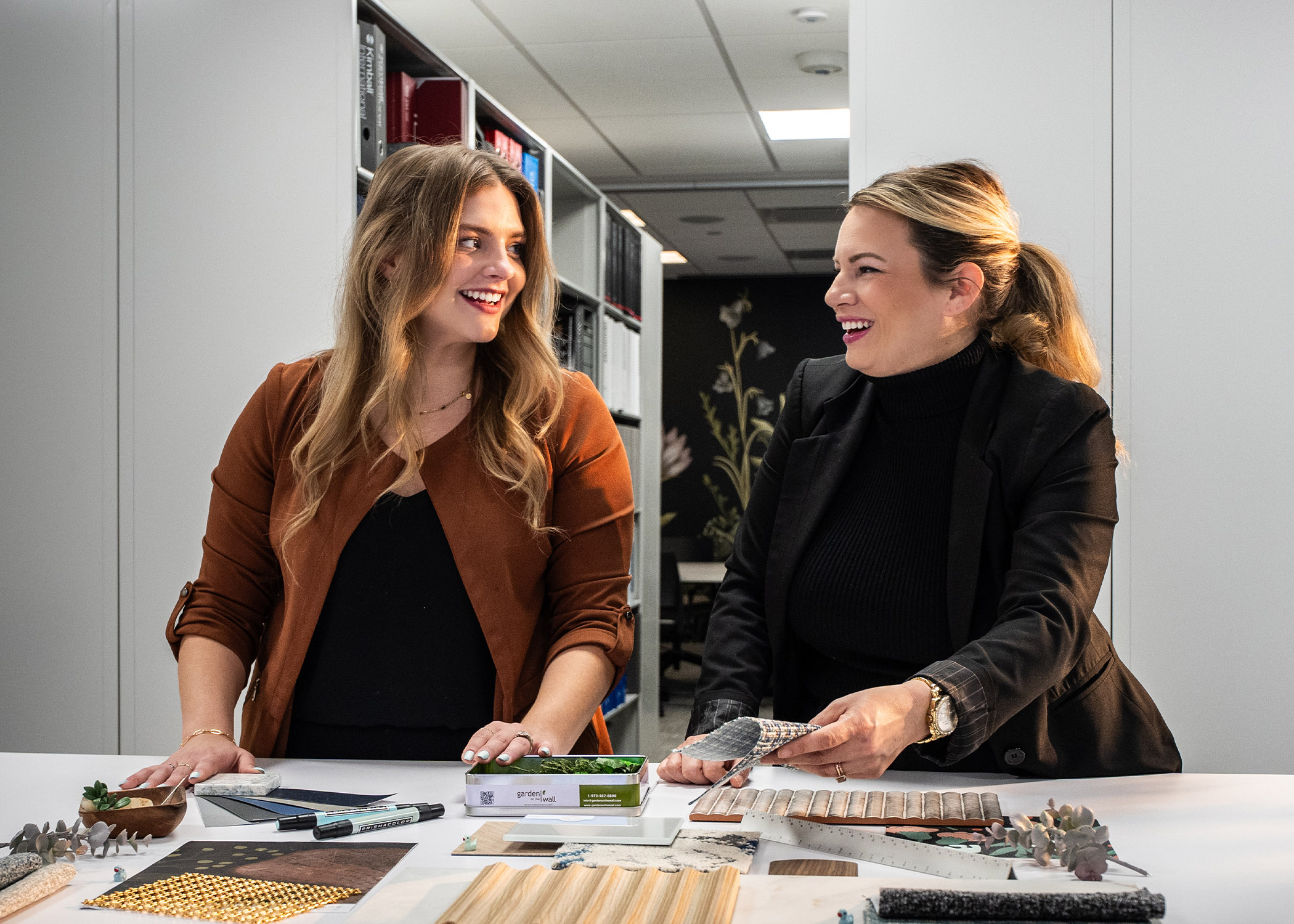
Walk into a thoughtfully designed space and you can feel it immediately. The lighting feels balanced. The textures make the environment feel warm and intentional. Surfaces still look polished years after opening day. Every finish works together to create an experience that feels authentic to the brand and comfortable for the people using it every day.
Material selection goes far beyond aesthetics. Every finish, surface, textile, and architectural detail is chosen with longevity, functionality, and brand evolution in mind. According to Lindsay Wehmeier, NewGround’s Regional Interiors Leader, designing with materials means balancing what looks inspiring today with what will continue performing years down the road.
“When I walk into a space that is five years old and it still feels bright, fresh, and relevant, that’s impressive to me,” Lindsay says. “We’re always asking ourselves how this space will look in 5, 10, or even 15 years.”
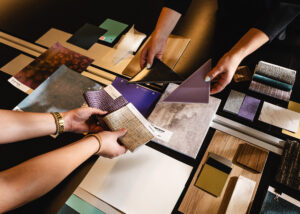
That long-term mindset becomes especially important in rollout programs where consistency matters across multiple locations. Selecting products with strong availability and durability helps clients avoid the frustration of replacing discontinued finishes with something that no longer aligns with their original vision.
While trends continue to influence interior design, Lindsay believes the architectural foundation of a space should remain timeless. Large-scale elements such as flooring, millwork, and wall systems need to support the brand for years, even as branding evolves. These elements are a cornerstone for design across the board.
“If a client wants to introduce trend-forward elements, we usually recommend doing that through smaller details that can be updated more easily,” she explains. “Things like pillows, wall coverings, accent paint, or decorative elements can bring personality into a space without locking the entire environment into a short-lived trend.”
That philosophy has become increasingly valuable as financial institutions and workplace brands continue to evolve at a faster pace. A neutral architectural base creates flexibility while still allowing opportunities for meaningful brand expression.
Sometimes, the right material becomes part of the brand story itself.
One standout example came during NewGround’s work with CFG Bank, where a custom backlit metal panel system transformed the main lobby into a signature experience. The dimensional feature added movement, light, and texture in a way that elevated the entire environment.
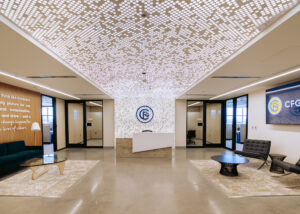
“It ended up having an even bigger impact than we originally expected,” Lindsay says. “At the time, it was something NewGround hadn’t done before, so there was a lot of in-house collaboration to make it happen.”
That collaboration included close coordination between designers, engineers, and onsite construction leadership, including NewGround’s Brad Kovacs, Senior Project Manager. The ability to work across disciplines internally allowed the team to move quickly, problem-solve efficiently, and deliver a highly customized solution within a tight timeline.
The result reflected something deeper than a single design feature. It demonstrated NewGround’s commitment to innovation and the value of integrated teams working toward one vision. NewGround’s process was built entirely around the streamlined concept.
As materials continue evolving, Lindsay is seeing a shift toward warmer, more natural environments. Rich browns, layered textures, soft curves, and organic elements are becoming increasingly prominent in both financial and workplace interiors. Millwork details, rounded drywall openings, and softer architectural forms are helping spaces feel more welcoming and human-centered.
Biophilic design also continues gaining momentum, with natural wood tones, greenery, and sustainable materials creating stronger connections between people and their environments.
At the same time, some longtime design staples are beginning to fade. Cool gray palettes and heavily veined granite or quartz surfaces are appearing less frequently as clients move toward warmer, sustainable, and more balanced interiors.
Sustainability is also playing a larger role in material selection. Commercial-grade products are being evaluated not only for durability, but also for environmental impact, maintenance, and lifecycle performance.
“There’s a lot more innovation happening within sustainable materials,” Lindsay says. “We’re seeing products that are biodegradable, recycled, highly durable, and still visually beautiful.”
One material category generating excitement is PET felt products made from recycled water bottles. These systems provide acoustic benefits, are bleach-cleanable, and can be customized into wall panels, ceiling features, printed graphics, and dimensional installations. Their flexibility allows designers to solve both functional and aesthetic challenges at the same time.
Technology integration is influencing materials as well. Digital whiteboards and adaptable furniture systems are helping workplaces better support remote collaboration and evolving work styles. Ceiling design is becoming more intentional too, with designers increasingly treating it as a “fifth wall” rather than an afterthought.
Durability, however, still remains one of the most important considerations in commercial design. Materials must withstand years of heavy use while maintaining their appearance.
Tile continues to be one of the most reliable choices because of its resilience and longevity. Terrazzo and quartz flooring systems remain popular for their long-term performance, while commercial-grade carpet selections are carefully evaluated for cleanability, yarn composition, and color consistency. Even details like the makeup of porcelain tile matter. When chips or wear occur over time, well-selected products help minimize visual wear and tear.
In urban environments and high-rise applications, material selection also involves navigating building codes, certifications, and sustainability standards such as WELL and LEED requirements. That process requires close collaboration between designers, procurement teams, and construction professionals to ensure materials meet performance standards without sacrificing creativity.
For Lindsay, the process of selecting materials often begins with a single anchor element. That could be a textile, a flooring pattern, a color palette, or even inspiration pulled directly from nature.
“There’s usually one piece that starts the story,” she says. “From there, everything else builds around it.”
Inspiration can come from unexpected places. During work on Bellco Credit Union locations, material selections were influenced by Colorado’s natural landscape. One flooring pattern drew inspiration from rock quarry textures, helping connect the branch experience to the surrounding environment in a subtle but meaningful way.
That storytelling element is what ultimately gives materials purpose. Every texture, finish, and detail contributes to how people experience space. When chosen thoughtfully, materials do more than complete a design. They shape perception, support longevity, and create environments that continue feeling relevant long after opening day.